03.09.26
Why Nostalgia Is Everywhere Right Now
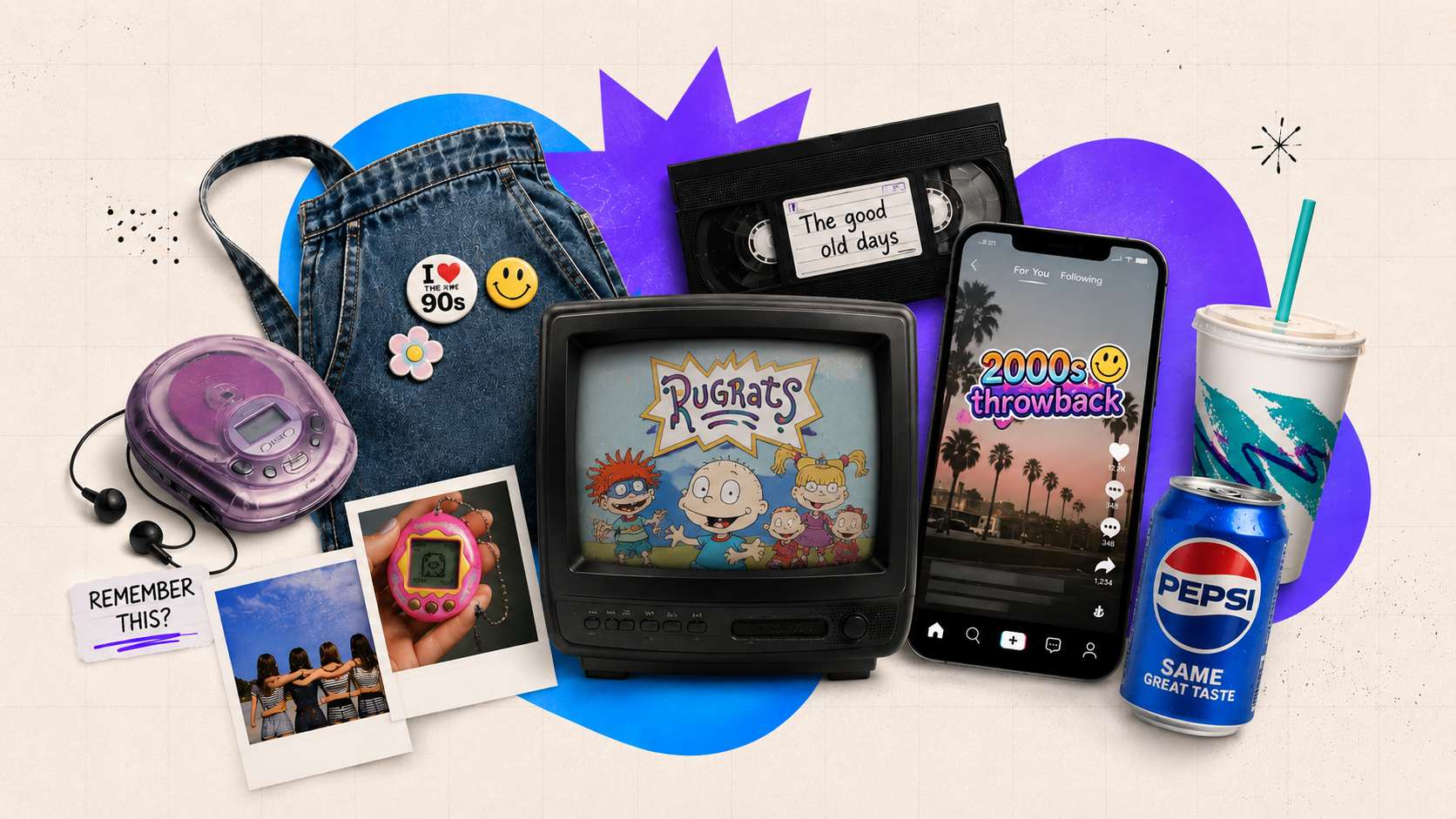
If it feels like everything lately is a throwback, you are not imagining it. From rebooted TV shows and revived fashion trends to “remember this?” posts dominating social feeds, nostalgia has quietly become one of the most powerful forces shaping culture online and all around us.
This isn’t just about reliving the past for fun. The rise of nostalgia reveals how people are feeling right now and why certain content, brands, and conversations resonate more than others.
A Comfort Response To An Unpredictable World
Periods of unpredictability tend to push people toward what feels familiar. Whether the future feels unclear, revisiting something you already know offers comfort. Nostalgia works because it removes uncertainty. You know how the story ends and you know how it is going to make you feel.
On social media, this often shows through throwback clips, rewatched shows, and music from earlier eras resurfacing in Reels, TikToks, or Shorts. A decade old song can climb charts again because it finds new life through trends. Familiar content doesn’t demand much from the audience and right now, emotional ease is exactly what people are drawn to.
Social Media Collapsed Time
The internet has blurred lines between past and present. One scroll can move you from early 2000s pop culture to 90s sitcom clips to home videos that feel deeply personal and oddly universal.
Algorithms prioritize relevance and engagement, not chronology. That means nothing ever truly disappears. An old logo, a childhood show, or a forgotten fashion trend can resurface overnight and feel current again. Nostalgia isn’t an occasional revisit anymore. It’s always within reach.
Nostalgia Is Easy To Recognize And Share
On social media, attention is won quickly. Nostalgic content works because recognition is instant. A familiar song, character, or scene stops the scroll before the caption even matters.
That immediate recognition also makes content more shareable. People tag friends, comment with shared memories, and participate in the conversation without needing extra context. Nostalgia lowers the barrier to engagement, which is why it performs so consistently across platforms.
Identity, Belonging, and Shared References
Nostalgia has become a form of identity. People define themselves by the eras they love, the shows they quote, and the culturally significant moments they remember. On social media, shared references create immediate connections.
Whether it’s a throwback trend or a revived format, nostalgia gives people a sense of belonging in an online space that often feels fragmented. It creates community through common memory, even among strangers.
A Brand That’s Using Nostalgia The Right Way
One brand that leans into nostalgia in a thoughtful way is Pepsi. In recent years, Pepsi has reintroduced retro packaging inspired by its 80s and 90s designs, bringing back classic logos, color palettes, and typography that longtime fans instantly recognize. Instead of fully reverting to an old identity, the brand modernizes those elements just enough to feel current while still triggering a strong emotional response.
On social media, those throwback designs became conversation starters. Users shared memories tied to the packaging, compared eras in the comments, and even posted their old photos recreating vintage Pepsi moments. The nostalgia wasn’t just visual, it invited participation. That made it work. Pepsi didn’t rely on the past as a gimmick. It used it as a bridge between generations, appealing to older audiences who remember the original designs and younger users discovering them for the first time.
When brands understand the emotional value behind what they’re bringing back and pair it with modern storytelling, nostalgia becomes a tool for building a strong connection with the audience. It becomes strategic.
It’s Not About Going Back, It’s About Grounding
Most people are longing to return to the past. They are longing for how they felt during those moments. Nostalgia isn’t about recreating old trends perfectly, but it is about recapturing a sense of ease, joy, and simplicity.
On social media, where everything moves fast and nothing lasts long, nostalgia gives people something to hold onto. It reminded them of shared experiences, emotional touchstones, and moments that felt lighter.
What This Means Moving Forward
For brands and creators, the takeaway isn’t to chase every throwback moment, but to understand why familiar content resonates and how it can be used thoughtfully. When nostalgia is rooted in genuine connection and cultural awareness, it doesn’t just perform well, it builds trust.