05.29.26
If Social Media Platforms Were People At A Summer BBQ
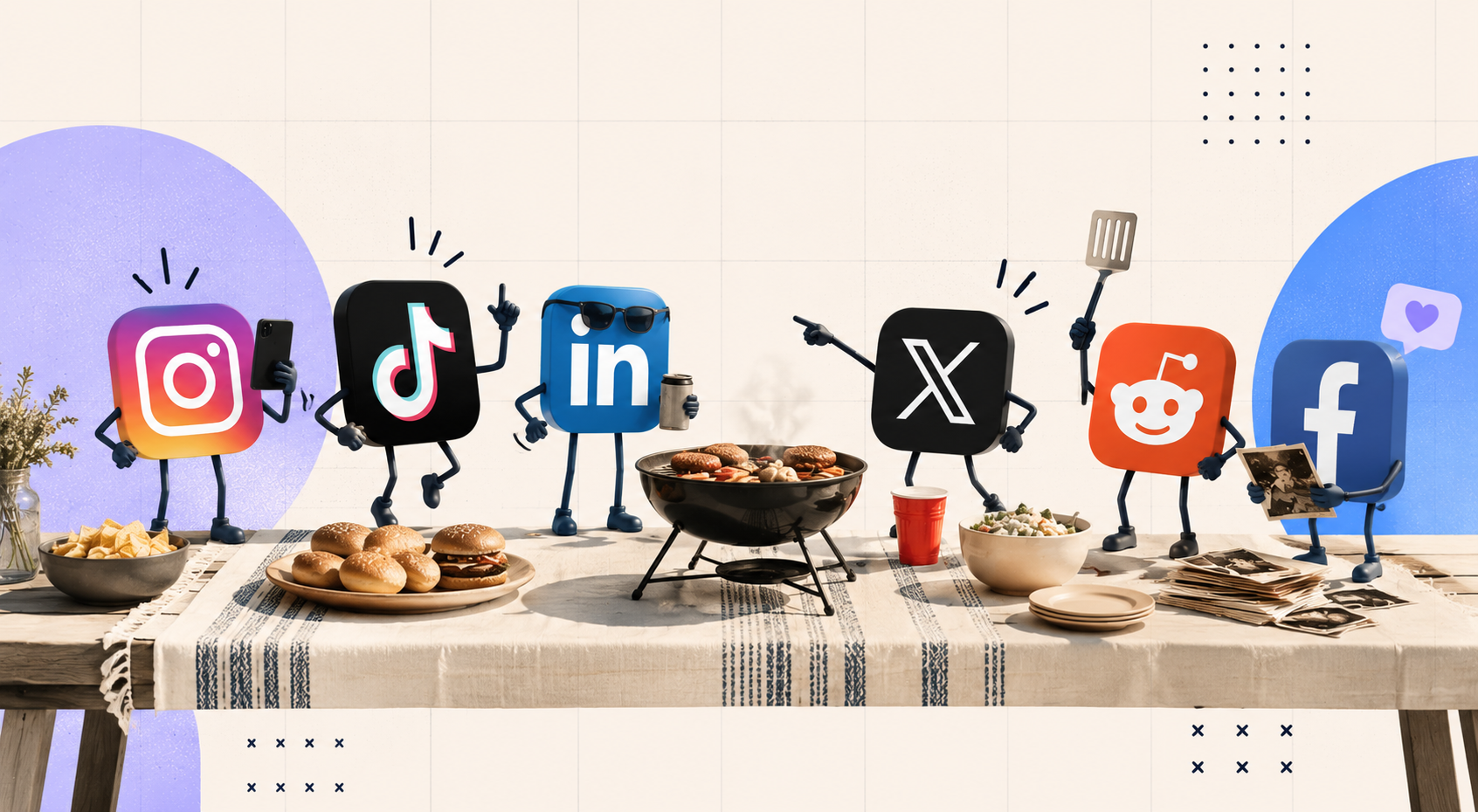
If Social Media Platforms Were People at a Summer BBQ
This is a completely unscientific breakdown of how every platform would behave once the grill turns on.
Every summer BBQ has the same mix of personalities. There is the person documenting everything before anyone can eat. The one who somehow turned casual conversation into a networking opportunity. The loud storyteller. The guy giving a 20-minute explanation about grilling temperatures that nobody asked for. And honestly, social media platforms are not that different.
Every platform has its own personality, expectations, pacing, and social norms. That is part of what makes social strategy so difficult for brands. The mistake isn’t usually posting bad content. It’s like walking into completely different rooms and acting exactly the same in every one. So in the spirit of summer, here is what social media platforms would look like if they were people at a backyard BBQ.
Instagram: Taking Photos Before Anyone Can Eat
Instagram arrived early, coordinated outfit already planned, and immediately started rearranging the table set up for “better lighting.” Before a single burger hits a plate, Instagram has moved the drinks closer together, adjusted the umbrella angle, and asked everyone to “hold on a second” before touching the food. Instagram clearly doesn’t come to the BBQ for the BBQ itself, it comes for the photo ops. And honestly, the pictures do always turn out really great.
At its core, Instagram still revolves around presentation. Aesthetics matter. Even casual content is usually curated to feel aspirational in some way. That’s why brands often struggle here when they overcomplicate things. Instagram users still want content that feels intentional, even when trends lean more casual. The platform has loosened up over the years, but the expectation remains the same: If it’s in the feed, people still want it to look good. IG is the person who turns a simple paper plate and lemonade into a potential magazine spread.
TikTok: Showing Everyone A Chaotic Video At Full Volume
TikTok showed up a little late, changed the entire energy at the BBQ in 15 minutes, and somehow convinced everyone to participate in something they initially said no to. TikTok has six unfinished stories happening at once, a niche conspiracy theory queued up, and absolutely no interest in staying on topic. But somehow, it works.
People gather around TikTok because the platform thrives on entertainment, unpredictability, and momentum. It rewards personality over polish. TikTok is less concerned with looking curated and more concerned with holding attention. That is why brands often fail when they treat TikTok like a polished ad platform instead of a participation platform. Users don’t want content that feels overly rehearsed or corporate. TikTok is the person at the BBQ that says “wait, everyone has to see this.”
LinkedIn: Networking At a Cookout
LinkedIn arrived overdressed. Not dramatically overdressed, but enough for people to notice. Within 10 minutes, LinkedIn complimented the host’s leadership skills, asked someone what industry they are in, and somehow turned a conversation about hot dogs into a discussion about personal growth. They genuinely mean well, they just physically can’t stop trying to make things professionally insightful.
LinkedIn works best when it feels human, but many users still approach it like a digital conference room. The brands and creators succeeding there right now are the ones who are loosening up a little. They are showing personality, telling real stories, and speaking conversationally instead of corporately. Because even on LinkedIn, people want to interact with people. LinkedIn is just a few words away from turning a cornhole tournament into a keynote presentation.
Twitter/ X: Arguing Loudly Near The Cooler
Twitter didn’t even say anything before entering into a debate. Somehow, within minutes, Twitter is correcting someone’s grilling technique, making a joke half of the group understands, and actively participating in three separate conversations simultaneously. Twitter doesn’t want peace. Twitter wants discourse.
The platform thrives on immediacy, reactions, opinions and commentary. Conversations move fast, attention shifts quickly, and the best performing posts often feel reactive rather than planned. Twitter rewards participation over perfection. You don’t show up to Twitter with a perfectly crafted speech. You show up ready to jump into the conversation while it’s happening. Preferably with at least one sarcastic comment.
Facebook: Telling Stories About How Great The BBQs Used To Be
Facebook organized the BBQ, invited 37 people, brought pasta salad, and is currently showing everyone photos from their past five BBQs. And they are having a fantastic time doing so.
While other platforms chase trends and fast-paced culture, Facebook revolves heavily around familiarity and community. Groups, local conversations, family connections, and neighborhood recommendations are the ecosystems that continue to perform because they feel personal. Facebook isn’t trying to be the coolest person at the party anymore. It’s trying to keep the party connected. And they absolutely brought foldable lawn chairs “just in case.”
Reddit: Deeply Invested In One Extremely Specific Conversation
Reddit didn’t come here to casually socialize. Reddit came here to explain the optimal burger temperature and debate charcoal quality for 45 uninterrupted minutes. And somehow people are listening.
Reddit thrives on depth, specificity, and common knowledge. Users care less about polished branding and more about authenticity, expertise, and participation. Brands often struggle on Reddit because they try to market at communities instead of becoming part of them. Reddit is usually the person saying “Actually, there’s a subreddit entirely dedicated to this.”
What Brands Can Learn From A Backyard BBQ
Every summer BBQ has different personalities, conversations, and dynamics. Social media platforms are no different.
The brands that succeed on social media are not the ones forcing the same behavior into every platform. They are the ones paying attention to how people naturally interact in each space. Because a good social strategy isn’t just about creating content. It is about reading the room before you post.