05.28.26
How Social Media Changes In The Summer And What Brands Get Wrong
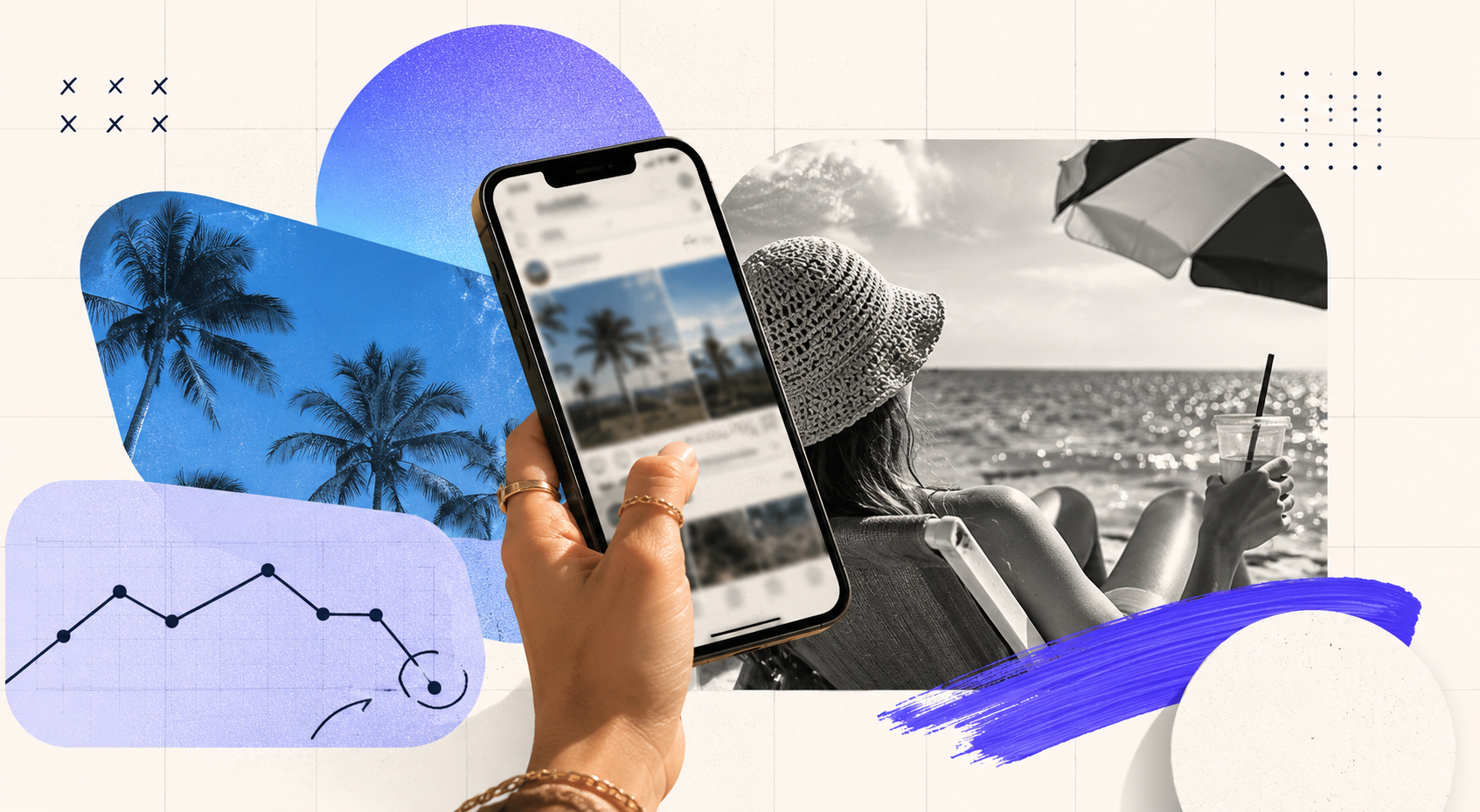
Every year, the same conversation is had between social media professionals: “Engagements are down. People must be offline. Should we slow down on our posting cadence?” It is an easy conclusion to jump to this time of year. When the weather is getting better, people are traveling more, going outside while leaving their phone inside, their routines loosen and it feels like their attention disappears. But that actually is not what is happening. People don’t stop using social media in the summer, they just use it differently. And that difference, as subtle as it may seem, is where most brands go wrong.
Attention Doesn’t Disappear. It Fragments.
In the colder months, attention is more predictable. People are inside more. They have longer stretches of uninterrupted time. Social media becomes something they sit down to consume. Summer changes that dynamic. Instead of dedicated scrolling time, social is used in between moments like waiting in line for a coffee, riding in the passenger seat, in between activities, and more. Scrolling is still frequent, but less focused. This is where brands misinterpret what’s happening. They see lower engagement and assume lower reach and lower interest. In reality, the attention is still there, it is just thinner, faster, and more selective.
There Is No “Normal” In The Summer
Summer introduces variability. Vacations, long weekends, shifting schedules, kids out of school. All daily routines become less structured. And when routines change, so does behavior online. People aren’t checking social at the same time every day. They are not engaging in the same patterns. Some days they are highly active, and others they are completely absent. This inconsistency can show up in your data as engagement spikes and dips, posts that perform unpredictable, and “off” days that don’t follow your usual trends. Summer data is naturally messier. It doesn’t mean your strategy is wrong, it just needs to be adjusted. Trying to force consistency in an inconsistent season often leads brands in the wrong direction. Over-posting and over-compensating can come back to hurt you more than help you.
The Rise Of Passive Scrolling
Another key shift during this time is that people interact less, even though they are still paying attention. In the summer, more users fall into passive consumption habits such as scrolling without liking, watching without commenting, or saving something mentally rather than actually engaging. This does not necessarily mean that your content isn’t resonating, it just means that the threshold for interaction is higher.
If you think about it, if someone is outside, with friends, or scrolling in between activities, they are less likely to stop and type out a comment, even if they enjoyed what they saw. So while engagements are dipping, awareness is often staying strong. This is a very important distinction. Brands that rely solely on likes and comments as a measure of success will assume their performance is declining, when in reality they are still being recognized.
Different Season, Different Content Expectations
Summer brings a noticeable shift in tone across social platforms, as well as life in general. People are generally more relaxed, more social offline, and less interested in demanding content. As a result of this, what performs well begins to change. Content that tends to gain traction is quick and easy-to-consume ideas, humor and relatability, and in-the-moment posts. Content that tends to struggle is long and dense educational posts, overly structured or corporate messaging, and highly produced content that feels disconnected. This is not saying that this kind of content needs to stop. It just means that it needs to be simplified, adapted, or delivered in a more engaging way. Summer typically rewards brands that are present, not perfect.
Planned Content Loses Some Of Its Edge
During more routine parts of the year, planned and structured content calendars can carry a lot of weight. Campaigns are designed, timelines are predictable, and audiences are more aligned in their behavior. But in the summer, that predictability tends to fade.
Brands that rely entirely on pre-scheduled content often feel out of sync in the summer. The brands that stand out are the ones who respond to timely moments, participate in conversations, and adjust quickly based on what is happening. Brands want to act more like participants rather than broadcasters during this season.
Where Brands Go Wrong
When brands are faced with declining engagement, they often default to the same response: post more. On the surface, it makes sense. If performance drops, increase output. But in practice, this approach often backfires. More content does not automatically mean more attention. Instead, it could result in lower quality content, repetitive messaging, or increased noise without increased impact. The issue is not volume, it is alignment. If behavior changes, your approach needs to adjust accordingly.
A Better Approach For Summer
Adapting to summer behavior doesn’t require a complete revamp. It requires a shift in mindset. A few principles to focus on: make content easier to consume, prioritize presence over perfection, show up beyond your own posts, expect inconsistency, and lean into real moments.
The Bottom Line
Social media does not slow down in the summer. It just stops revolving around predictable patterns. Attention becomes more scattered, behavior becomes less consistent, engagement becomes less visible, but the opportunity is still there for brands that are willing to adjust. The ones that succeed are paying attention, not just to metrics, but to people. Because in the end, social isn’t just about what you post. It’s about how well you understand how people show up.